

Do you struggle to understand the surf forecast? Would you like to know how to find the best surf spots and enjoy fun waves?
Great, then this article is directed to you.
Let me explain the basics you need to know about surf forecasts. All this should help you be at the right time and place. It saves time and petrol too. 🙂
Shall we begin?
The essential terms you need to understand when reading surf forecast
1. Swell
Did you know that the persistent wind on the ocean surface creates waves? The stronger the wind is, the bigger the waves.
If the origin of the wind is near the coast, we get wind waves or windswell. If the storm happens far away from the beach, as the waves travel, they get more organised; we call it groundswell.
2. Size
The size of the swell on the surf forecast is an average size. The size is estimated based on the information received on buoys on the open sea. So if the forecast says 1m, some of the biggest waves can be more than that.
What’s also important is the bottom of the ocean and the shape of the shore.
Surf tip: If there is a big storm coming, seek more hidden spots that are more protected. As the angle changes, the waves lose their power and get smaller. For example, if Praia da Amoreira receives a big swell, Praia da Arrifana can be half the size.
3. PERIOD
It’s the number of seconds that passes between one wave and another. The bigger this period, the more “organised” the waves are.
A period of less than 10s is considered a wind wave. Between 10 to 12 seconds is getting enough energy to create fun waves at the places more exposed. From 13 to 15 seconds, it can bring nice waves to less exposed places.
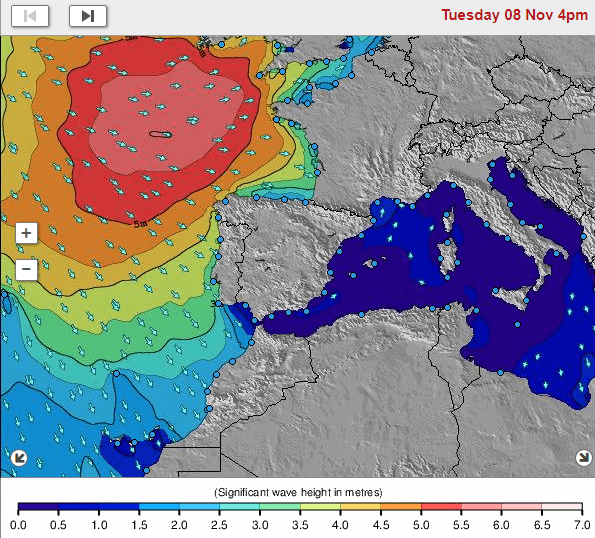
For example, a big storm with a period of 15 seconds (picture below) reaching the West coast of Portugal also brings bigger waves to Faro Beach, despite our southern location.
4. Direction
This one is very important! Here comes the know-how of your local surf spot and spots you tend to surf. Does the swell come directly to your beach, or does it have to travel around? Turn on Google Maps and see the position of your surf spot on the map for a better idea.
The more perpendicular the swell to the surf spot, the bigger the waves and the more power they have.
Surf tip: This is the fun part of choosing the right spot for you. If you want to avoid huge waves, seek hidden places. Is big swell coming to the West Coast? Great, go and find surf spots in the south.
5. WIND
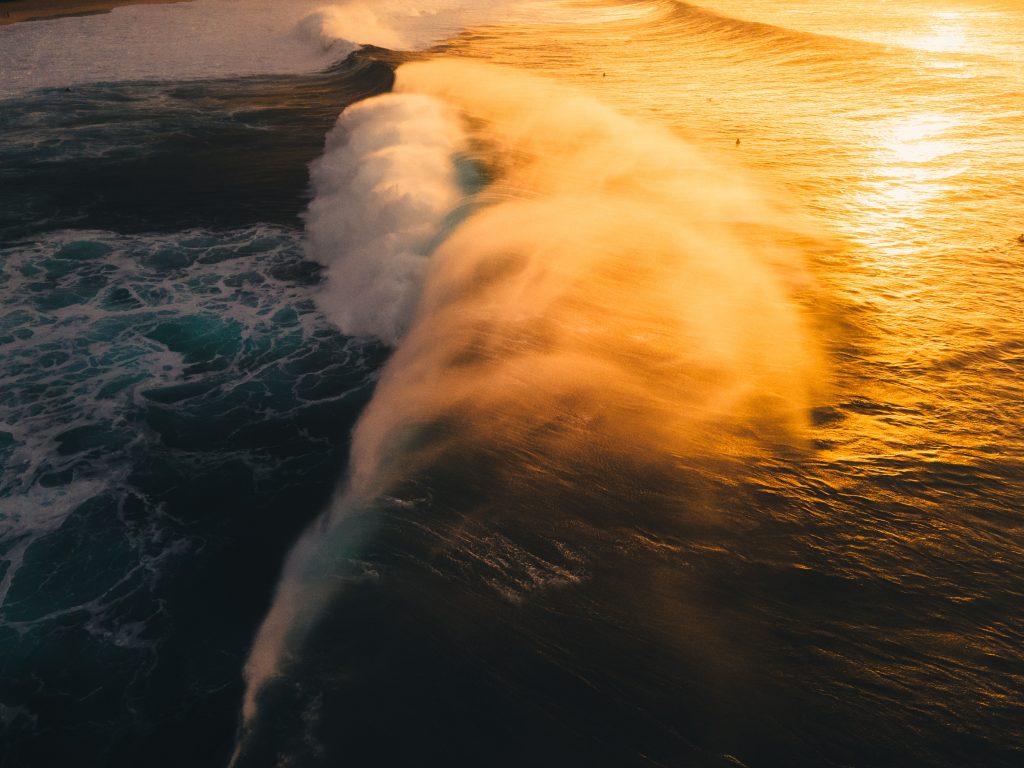
Two basic terms you need to know are onshore wind and offshore wind. Onshore is a wind that blows from the sea onto land. The offshore wind blows from the ground towards the incoming waves.
Which one is better?
If you are a beginner, you don’t care. Onshore can close the waves and create more foam for you to surf. If you are already riding on the green waves, you want to seek places with offshore wind or, at its best, no wind.
Surf tip: With offshore, you will get more clean waves. Although soft onshore wind with less than 15km/h won’t affect your surf that much either. 🙂
Which surf forecasts to use?
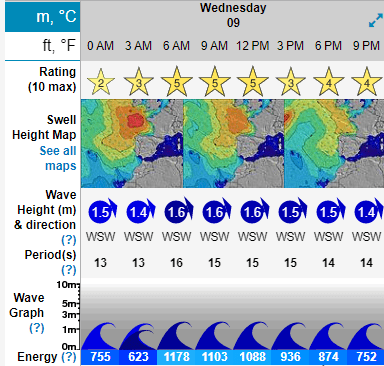
My personal preference for Faro Beach is surf-forecast.com. I like it because it shows me the wave map. I can see if there is only one swell or a mix of two or more altogether (the wave graph). Bonus is a Local Wave Finder and weather forecast.

Of course, to make a final decision, I like to look at a few other surf forecasts to see if they agree, such as Windguru, Windy or Magicseaweed.
SUMMARY
I hope you find this article helpful and that it helps you to understand more about the science behind surfing. Have fun out there, and maybe see you in the water.
If you are enjoying this, please share it with your friends. You can also reach out to me via Instagram.
Feel free to say thank you by buying me a Ko-Fi. Every little helps to keep this project running.